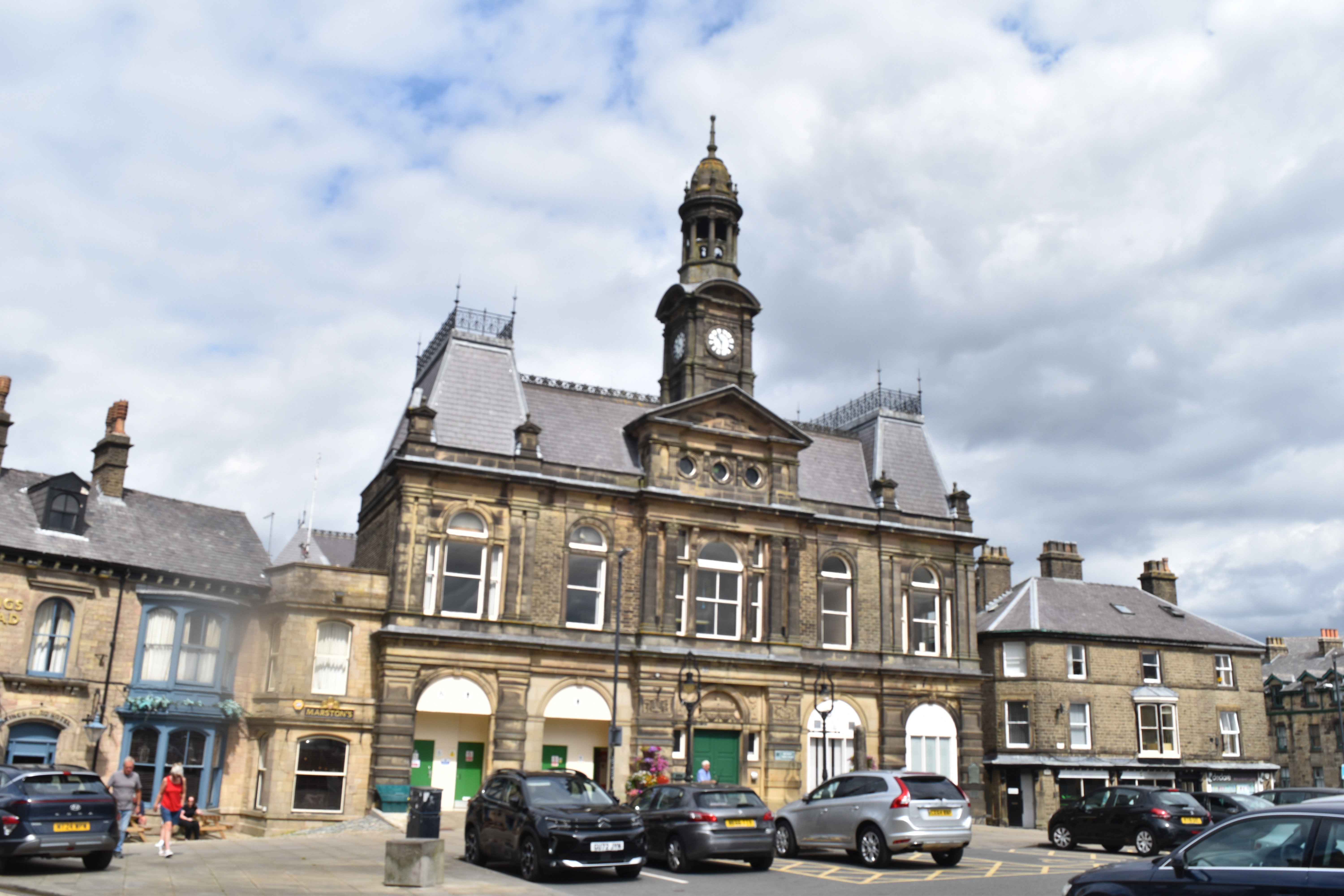
The past and future of Buxton Town Hall
Buxton Town Hall is in the news. The BBC reported 24 April 2026 that High Peak Borough Council said it had;
"been considering the sale of Buxton Town Hall for a while as the Grade II listed building is no longer fit for purpose for the needs of the local authority, the number of staff we have, and modern working practices".
It continued:
"The council is very mindful this is an important historic building in the town and so has been engaging with community-led proposals for the future of the building for several months now. "
"Any new owner will be required to show that they will be a responsible custodian of the property who can preserve the building's protected heritage features in a sustainable way, while enhancing its overall appearance."
"As a council, our main priority is to ensure that the future of the building is secured in a sustainable, financially resilient way, with no preference as to whether that is as a community asset transfer or private sector solution." Subsequently High Peak Borough Council clarified their position in a statement which “No decision has been taken to sell the town hall building, and neither is one pending at present. At this stage, High Peak Borough Council is marketing the property and inviting interested parties who may want to take the building on, to express their interest.” We will work with our appointed agents to ensure that the Council secures best consideration in accordance with Section 123 of the Local Government Act 1972 That act provides that pencils must not sell or transfer land for less than the market value of the best price reasonably obtainable However the test is not purely price/driven . It requires a defensible commercial judgement that balances price, deliverability , risk and credibility . In other words “The best consideration” requirement is a structured commercial assessment rather than a mechanical pricing exercise, Unfortunately it appears that social value that cannot be expressed in monetary or economic terms must not be taken into account. . The best consideration argument seems understandable in terms of preventing corruption, but the fact that social value cannot be taken inti account seems unfair. As we shall see it reduces a building with a long and interesting history to just another balance sheet item. And as can be seen from the following High Peak Borough Council inherited the building from the former Borough of Buxton, and as we shall see it was originally paid for by the rate payers of Buxton rather than those of the High Peak. The Borough of the High peak had the good fortune to have acquired the Town Hall as an asset when Buxton became part of that Borough. Apart from being a listed building , it is a great shame that a building which has played its part in Buxton’s local history can essentially be sold to the “highest bidder”. Hopefully it will be taken under careful stewardship and be returned to some of its originally intended role, if not for local administration but at least as a home for a free library and a museum again. So here are some highlights about some of the people and companies involved in building the Town Hall and some of the events which have taken place there over the years.
In the 1880s Buxton was run by a Local Board which the held its meetings in the Old Court House in, at that time the board was chaired by local draper Edward Milligan, who still held the role when the Local Board finally got to move into its very own Town Hall . On 26 June 1889, Milligan was to be present at the official opening of the Town Hall.
The question of whether there was a previous Town Hall in Buxton seems cloaked in obscurity. Newspaper articles from the 1850s onwards refer to an “ Old Town Hall” . Then following on from the redevelopment of Eagle Parade in the 1890s, some of the businesses in Eagle Parade advertise their addresses as “Old Town Hall”, the row of buildings to the right of the Eagle Hotel site were demolished and the lots sold off in 1890, although the lots were sold separately it was subject to the frontages being approved by Devonshire Estate. Given the addresses, it is probable that the Old Town Hall Was where in one of the demolished lots. The demolished lots also included the Buxton Endowed School, which had by then migrated to the new building in Temple Road. It appears that the former Eagle Parade block, there was a local Mechanic’s Institute with library and meeting room. In 1859 the Buxton Advertiser reports plans to expand the meeting room of the Mechanic’s Institute. It seems to have been a large room which was available for public functions and which may have been referred to as Town Hall, not in the context of municipal offices, but rather as a meeting place.
In addition to this “Old town Hall”, there was the new market building, constructed 1857, based on designs by Henry Currey. The whole town was a bit shocked when it burned down in 1885.
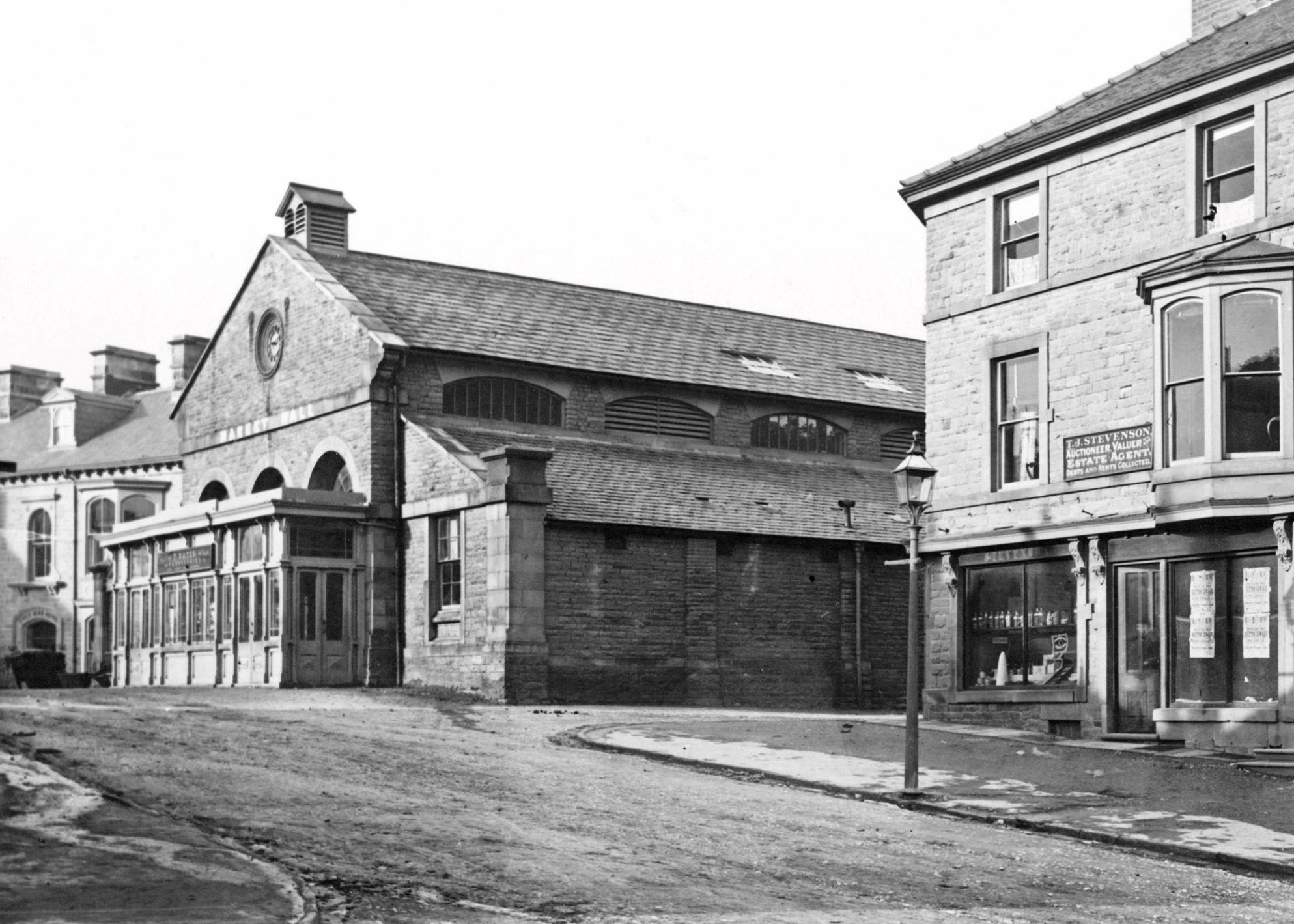
The Old Buxton Market Hall designed by Henry Currey, which burned down in 1885. This is the site of the current Town Hall
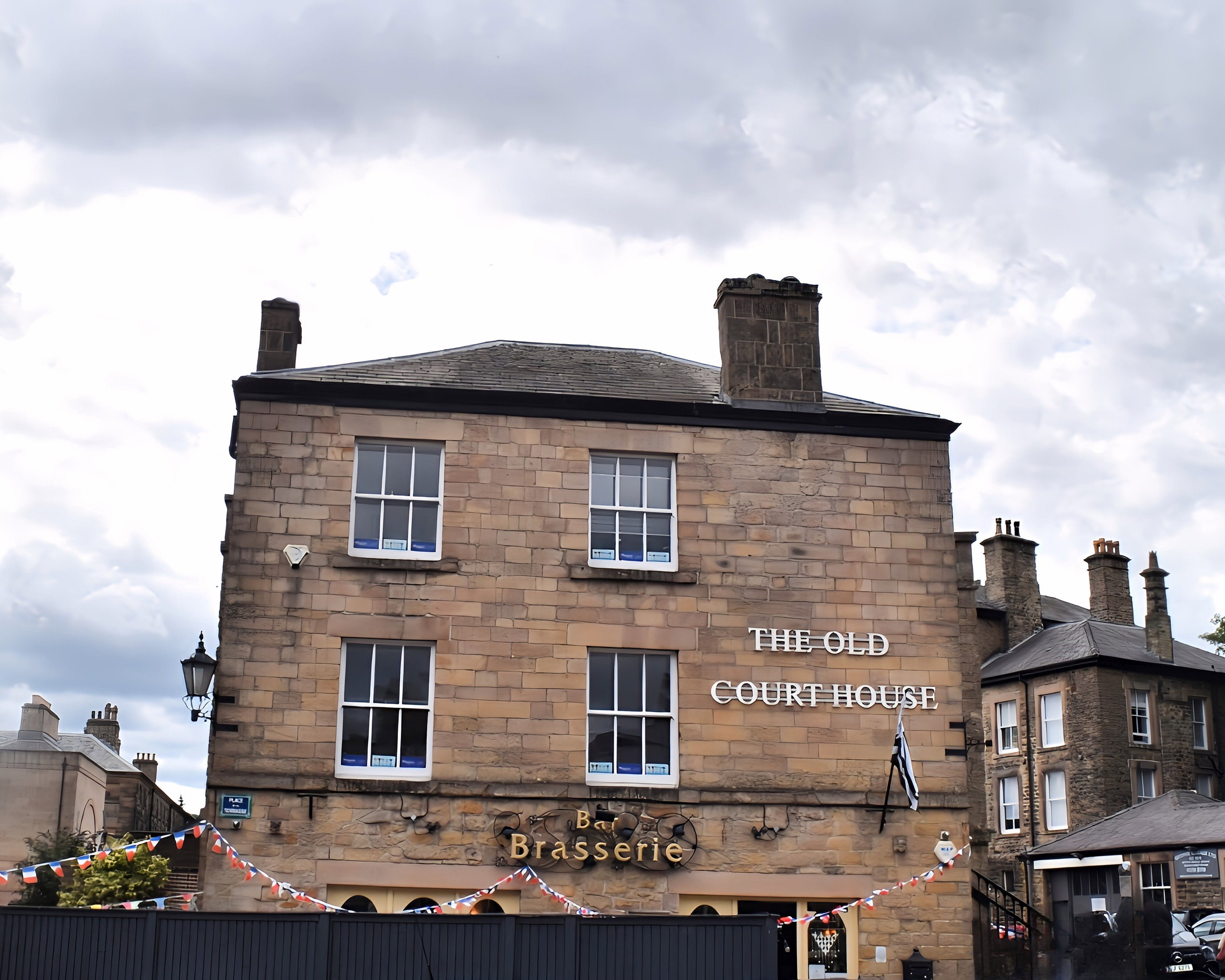
The Old Court house in Buxton ( August 2026) in the absence of an actual Town Hall, the Local Board used the upstairs room for meetings.
As noted the local Board held its meetings in the Old Court House and various administrative functions were carried out in other buildings. Gas bills had to be paid at the Gasworks offices, then in New Bride Street, which seemed to cause great irritation to those who had to go and wait in line there. The local board had already applied to the Home Office for a loan of £2500 to build a Town Hall, but nothing had happened . When the Market Hall was destroyed by fire, it was fortunately well insured and the Local Board received £1900 as an insurance settlement. However, including a public library provided a better possibility of accessing improvement funds. In the 1880s and 1890s, Buxton’s total rateable value was around £80,000 producing general rates of around £8,000 for revenue expenditure , there was little in the way of capital reserves. Therefore any construction of a Town Hall would need to be funded by borrowing and that required the approval of the Local Government Board. While funding a Town Hall might not have received approval, adding a public library increased the chances of success. The Mid Victorian age saw a flurry of enlightened legislation, including The Public Library At of 1850, and the subsequent amendments the Public Libraries Act 1855 and the Public Libraries Amendment Act 1866. Together these acts allowed councils to charge a rate of 1d in the £1 towards Library and Museum building, on the basis of a simple majority. So the final plans for a Town Hall included provision of a Free Public Library as well as the office facilities. Still the local Board needed approval from the Local Government Board to make the investment. Central Government simply did not trust local boards to raise their own loans, possibly fearful that letting them do this would lead to extravagant expenditure and future bankruptcy.
In May 1886,the Local Board held a competition at which William Pollard’s plans were selected, with an estimated cost of £7,500[1] The new Town Hall was costed at around £10,000. There was some uncertainty about whether the originally agreed £2,500 was still on the table, plus there was the insurance of £1900 sitting in the bank , so the board still needed to raise a loan of £6,100. The Clark to the Board, Mr Josiah Taylor had to submit the proposal to the Local Government Board , together with the plans and see what happened.
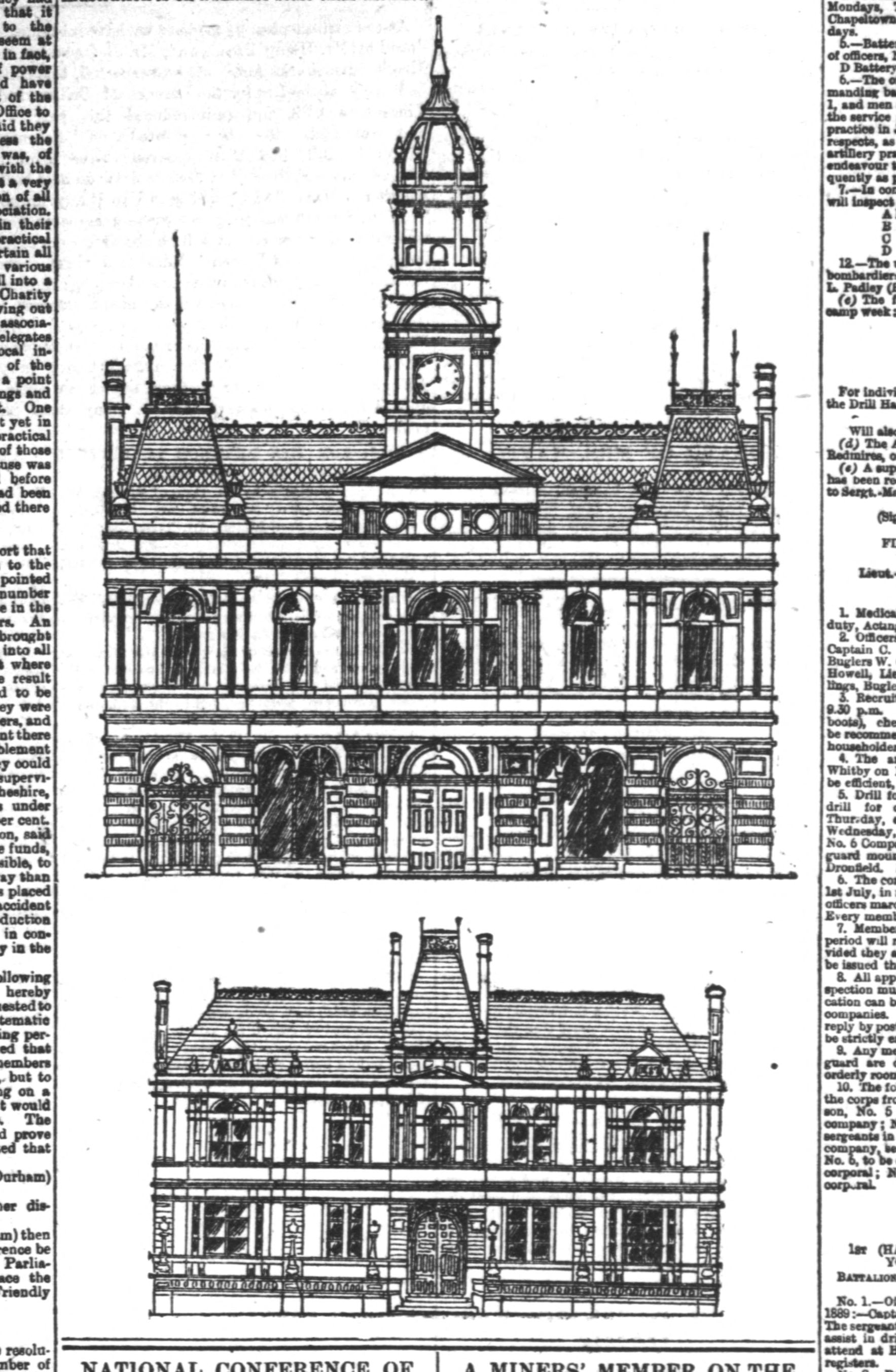
A newspaper impression of the new Town Hall in Buxton in 1889
The enquiry was held on 26h January 1887, at the Old Court House. Although the plans did have widespread local support, there was opposition from A W Slack, a Manchester Solicitor and substantial local landowner. He subsequently withdrew his objections the plans. The next move was the arrival of a Government Inspector, who would hold an Enquiry into the plans. In this regard, Buxton was lucky that the Enquiry was conducted by John Harrison, who had visited the town on several past occasions to conduct Enquiries into loans required for the gas and water works, so he knew both the town and the Board members.
Harrison was educated at the Grange School, Sunderland, and at Edinburgh University, and was then articled to the London and Birmingham Railway, after which he was in his brother’s office at South Shields, and subsequently on the Stanhope and Tyne Railway. On the expiration of his pupillage, in 1838, Harrison was engaged under the late Brunel on the construction of the Great Western and South Devon Railways. In 1851 he retired temporarily from the profession, and devoted his attention to agricultural pursuits, farming a holding of about 500 acres, near Stroud, in Gloucestershire. He became a member of the Council of the Royal Agricultural College at Cirencester, and wrote a number of articles on various subjects of interest to the agricultural world, which appeared from time to time in the Journal of the Royal Agricultural Society. In 1865 he emerged from retirement as a member of the Royal Commission on the Pollution of Rivers. The Commission existed for two years, and made exhaustive reports on the Thames, the Lea, and the rivers of the West Riding of Yorkshire. In 1871 Harrison was offered, an Engineering Inspectorship in the Local Government Act Office, later the Local Government Board. From that time as one of the Engineering Inspectors of that Board, he travelled constantly throughout the country in holding inquiries with reference to applications from local authorities for permission to borrow money.. He was always considered kind and considerate, and rigorously exact in enforcing the provisions of the Acts of Parliament he had to administer, but also in considering the interests of the various districts concerned. As mentioned, Harrison already knew Buxton well and had visited several times in the past, when the Local Board had been raising loan finance for the gasworks. He was already been acquainted with some of the Buxton attendees and listened carefully to all the evidence supplied.
One of the concerns that Harrison had about the project was that the Board’s surveyor Mr Hague, should not double up as the clerk of Works for the Town Hall project . Leaning on his experience as an engineer , Mr Harrison seemed to believe that since Hue, already had full time responsibilities that t would be too much for one man and a full time clerk of works should be appointed. But clearly that added to the cost. Otherwise Mr Harrison seemed generally favourable to the project and seemed to believe that obtaining finance would not be a problem.
The Local Government Board approved the loan in April 1887 and the Local Board set about putting plans for the work in motion .Previously on 18th March it was confirmed that the Duke of Devonshire had gifted 410 square yards for the building of the Town Hall. With the land and finance agreed , on 20th April, Josiah Taylor published Requests for Tenders- “for the whole of rebuilding work for the New Town hall “to be delivered by noon on 11th May 1887. By 21 May it was announced that Mr James Salt’s tender had been accepted for the amount of £8,900 ( it was apparently the lowest of fifteen tenders received) [2]
Things the moved fairly rapidly, since the Local Board wanted to celebrate the laying of the foundation Stone, to coincide with the celebrations for Queen Victoria’s Golden Jubilee.On 21 June 1887, after a parade through the town, the residents so Buxton assembled on the site of the new Town hall, where temporary stands had been erected for seating. There were number of congratulatory speeches as the ceremony for laying a foundation stone commenced. Edward Milligan, as Charman of the Board was doing the honours and after discussing the virtues of the Queen-Empress, he turned to the rather more local matter of the Town Hall.
“Again I may say that this is a auspicious occasion in that we are met together to carry out the important function of laying his foundation stone , upon. This which I hope a superstruction (sic)will be raised honourable to the builder and complete in all its parts . for many years, at more or less, or longer or shorter intervals, the subject has been brought forward and the attempt made to arrange the erection of public rooms suitable for the requirements of Buxton. The unfortunate destruction of our Market Hall has again brought the matter most strongly to the fore. Some of you may know the difficulties your representatives on the local board have had to contend before the legal objection could be removed , but I have to congratulate you on the success that has so far crowned our labours. The Local Board to a man is animated by the desire to meet your wishes safe and practicable , and although doubts have existed in some minds as to the advisability of expending a large sum of money on this proposed building , yet I think those doubts have been removed and we are all united in the wish to have a handsome and noble building worthy of the site, an a ornament, a useful ornament, I may say to the town , In this building we hope to have pubic offices, light and convenient , in which te large extending business of the town may be carried on with more comfort to yourselves , and with better sanitary and desirable arrangement for our valued employees. The great future and necessity for raising the educational level of every class has been fully shown in the passing and working of the Education Acts, and in this building we wish to make a home for a further extension of that education by the establishment of a Free Library”
Mr Milligan continued , pointing out that although the plans for the building included the clock tower , it was currently outside the budget. James Salt as planning on a flat roof, but reckoned he could build the tower at the last minute for an estimate cost of £250 and public donations would be welcomed
Prior to the laying of foundation stone, Josiah Taylor summarised the history development and that a number of pertinent documents, newspaper clipping etc regarding the history had been included in a stone bottle, which was within a capsule in the foundation stone.
With the speeches out of the way, they got down to the business of laying the foundation stone itself. The stone used in the construction measuring 4ft 4i in length, by 3ft 3in in depth and 2ft 8 in in width came from Rowsley quarry, and the foundation stone was a three ton block engraved with “.Laid June 21st , 1887 , being the Jubilee of Queen Victoria by Edward C Milligan , chairman of the Buxton Local Board “ [2]
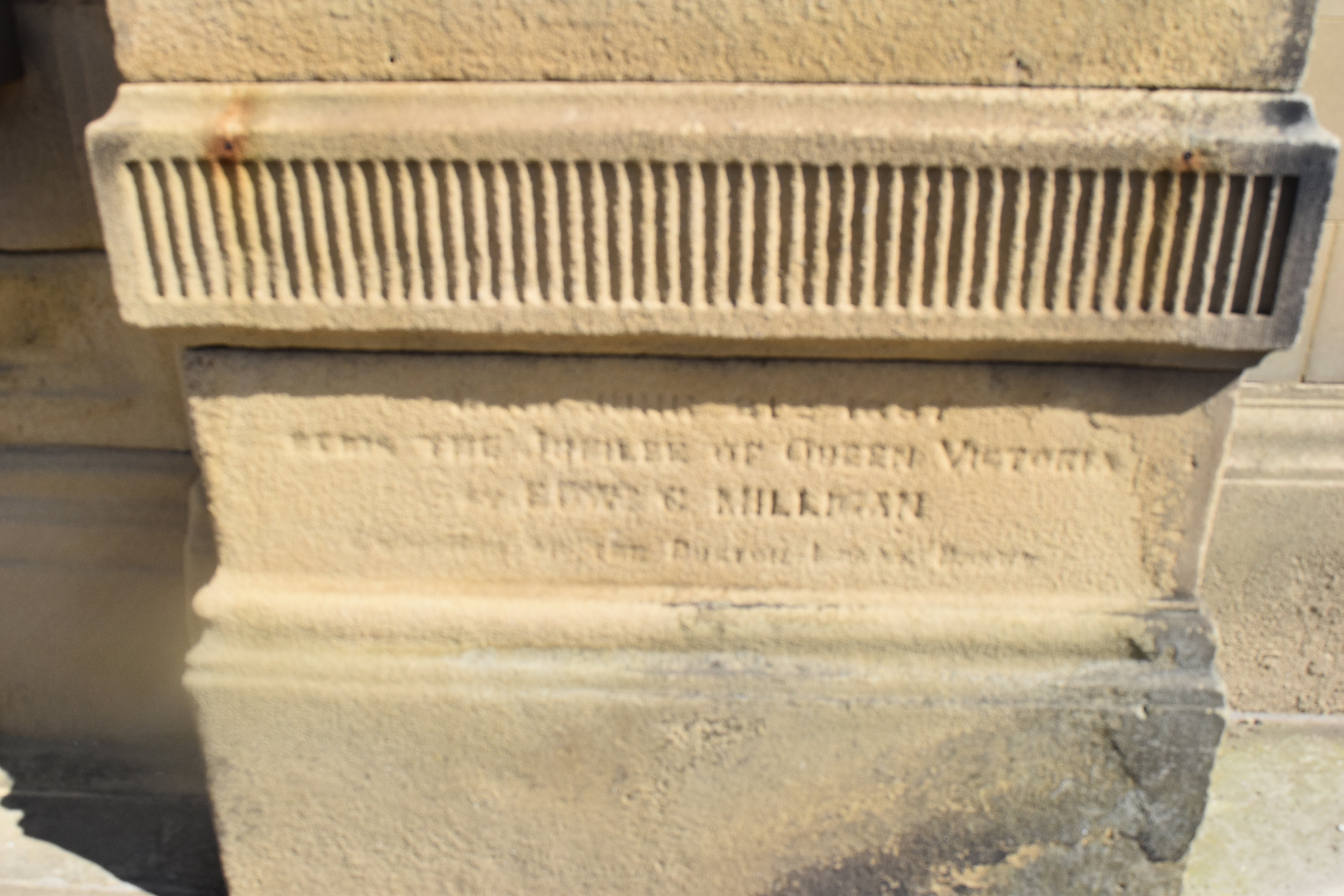
The foundation stone of the Town Hall ( August 2026) the dedication is only just visible. "Laid June 21st , 1887 , being the Jubilee of Queen Victoria by Edward C Milligan , chairman of the Buxton Local Board "
The architect, William Pollard presented Mr Milligan with a ceremonial trowel and then James Salt, the builder gave him a handmade ivory hammer with the same wording. With the Foundation stone laid, the assembled guests were then free to join the rest of Jubilee celebrations in the town .
Building seems to have mainly gone well. An accident with a crane caused a temporary delay and at a Board meeting in 12th July there were complaints that progress was too slow . Mr Ellison, the Clerk of Works was summoned to explain. He admitted that there were delays but Buxton was a “rather country place”. Nevertheless he hoped to get the roof finished by the end of summer. Apparently Mr Salt was also having difficulty finding the labourers. The Board voted to write to him asking him to get a move on. [3]
By June 1889 the Town Hall was nearly finished. The Local Board had hoped to have the Prince of Wales perform the opening, but between attending the Great Exhibition in Paris, the Royal Agricultural show at Windsor and the pending visits from The Shah of Persia and The Emperor of Germany , he could not fit it in his calendar. So they had to settle for the Marquis of Hartington instead.
The Marquis arrived accompanied by his brother Lord Edward Cavendish. The opening turned out to be quite an event with special trains bringing day-trippers from Liverpool, Manchester, Sheffield, Nottingham and Derby who were able to enjoy a tour through the well decorated town before watching the ceremonies.
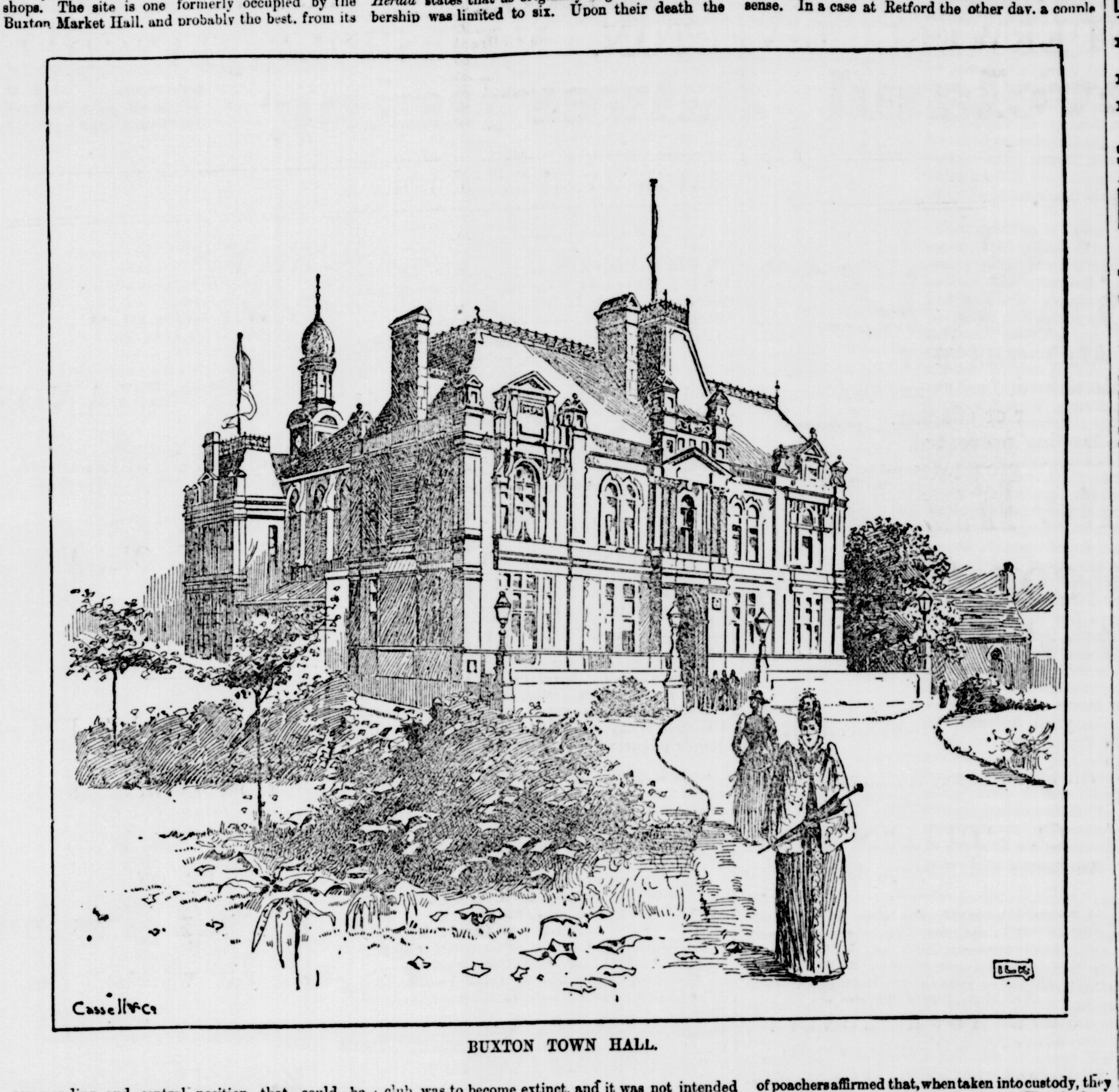
A contemporary newspaper drawing of the rear view of the new Town Hall from the Slopes
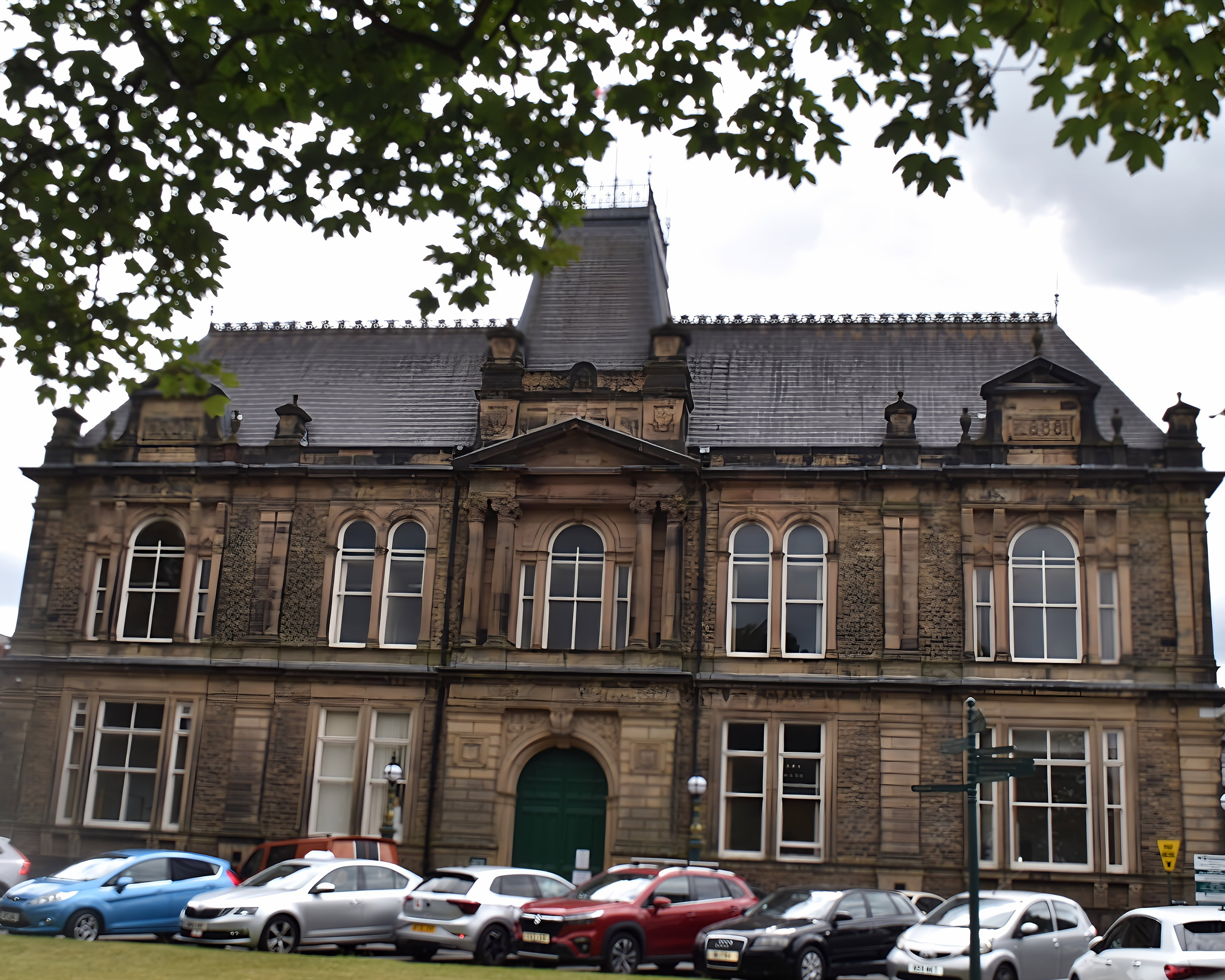
The rear view of the Town Hall ( August 2026)
At 2.15 pm, a procession stated from Buxton’s Midland Station headed by the local Police and Fire Brigade and the Buxton and Bakewell Volunteers. From the station a procession of carriages set off for the Town Hall, headed by the Marquis of Hartington and Lord Cavendish accompanied by Edward Milligan, also in the procession were the Mayors of Manchester, Stockport, Derby and Chesterfield , The Master Cutler of Sheffield and Lt Colonel Sidebottom, the MP for the High Peak. The newspaper reports were fulsome in their praise for the new building.
“The want of such accommodation as the new and hansom pile of buildings will provide has long been felt in the town . There was as previously indicated , formerly a Town hall in the place , and when this was demolished by fire , it was decided to erect a Town hall, Market hall , Free Library , and Public Offices on the sire. The Duke of Devonshire ,, with his customary liberality gave about 4000 yards of land in order that the building might be made larger , and might have suitable approaches to it , The new buildings have cost £10,000. The buildings embrace boardroom and offices for the urban Sanitary Association , Town hall Free library, and market shops, The site id one formerly occupied by the Buxton Market Hall, and probably the best from its commanding and central position that could be found in the town. The area covered is about 1500 square yards, and there are main frontages to the terrace walks and the Market place. The public offices occupy the northerly or Terrace Walks block and provide commodious and lovey office accommodation for the varies departments . The boardrooms occupies a portion of the main frontage in this block, and is handsomely designed and appointed apartment. Several commodious committee rooms are provided convenient to the boardroom . A strong room is arranged adjoining the collector and accountants offices , and provision is made in the basement for the caretaker , for gasfitters workshops and for the heating apparatus for the whole of the buildings. Ifs are provided for various uses in the buildings . Provision is made near the public offices for the adequate housing of the local lodge of Masonic brethren. The fee library accommodation includes a large reading room , 40 feet by 25 feet , a smaller reading room and all necessary conveniences.
Various handsome shops have been arranged on the south and east fronts. The public hall is a handsome room 80 feet by 40 feet , by 35 feet high with a large gallery at one end , and proper cloak and retiring rooms. Ample storage accommodation is provided in the basements for all the shops , with loading entrance from, side street , A clock tower is provided on the Market place frontage , and the clock in same is a memorial clock presented by the committee of the Lord Frederick Cavendish Memorial Fund , and is being supplied by Messrs Smith and Sons Derby. The outside walls are of local stone, built hollow and lined with bricks. The facing, where not tooled ashlar is with best Yorkshire parpoints . The ashlar stone is from Rowsley quarries and Welsh slates are used for the roofs. The woodwork in the principal situations is in pitch pine, varnished. The staircase to the assembly rooms is in polished York Stone and the landings to the same in iron and concrete . The staircase to public offices is oak and pitch pine, with ornamental ceiling light over same .The sanitary arrangements have received full consideration. . The walls of all lavatories &c, are lined with glazed brickwork . The floors of the various halls, corridors, lavatories are Mosaic and Terrazzo paving. The general contractor for the work is Mr James Salt of Buxton and the following firms have executed special portions of the works , viz .- Plastering, Messrs Brocklehurst Brothers, Buxton; painting, Mr Binns Buxton; Mosaic floor, Mr Ebner, London; fireproof concrete flooring , Messrs Homan and Rogers, Manchester ; grates mantel , tile work , and heating apparatus , Messrs Elliott, Olnay and Co, Manchester; strong room fittings, Messrs George Price and Co: locks, Mr J Gibbons; wrought iron work, -Mr Parr, Swindon; sanitary fittings Shanks and Co . ”
One or two things worth noting here . Firstly the well composed and detailed reporting . MailOnline interns might take note. Similar descriptions were syndicated across the Kingdom, so identical descriptions of Buxton’s new Town Hall appear in many local newspapers. . The cost of £10,000 in 1889, would be approximately £1,7 million in 2026, so the cost does not sound bad in those terms. Nice to see that the building was constructed by a mix of local contractors and specialists from outside the area, with the main contractor being the local man James Salt. James Salt had his premises at the Devonshire Works in Buxton as a general builder, joiner and contractor, he was clearly busy in this period since he was also the contractor for the new Theatre at the Pavilion Gardens which was being constructed at the same time as the Town Hall. He had tendered £3,100 for that project. As noted in the article local plasterers and painters were used. Other more specialist fittings came from elsewhere in Britain, George Price were based in Wolverhampton, manufacturers of Safes, Strong Rooms, Locks for Her majesty’s Board of Works , the Admiralty and the Bank of England. So whatever cash , the Collector had collected from Buxton ratepayers would have been safe. Price died in 1887, but the Company was carried on by Gibbons lock makers in 1906.
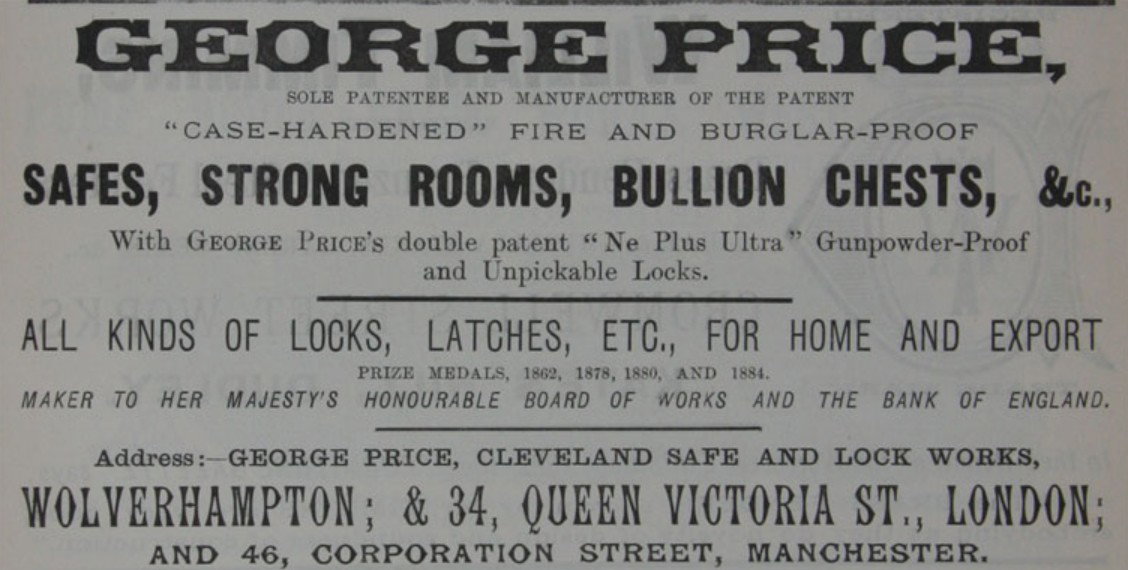
The company George Price from Wolverhampton installed the Town Hall strongroom, used to keep the payments of rates and gas accounts safe
Elliott, Alstone, Olney and Co were stove, kitchen range and grate manufacturers with head offices at 1 St Ann Square and then Deansgate in Manchester. They seemed to have obtained a good reputation for supplying ironmongery and tiles, ands are mentioned as having supplied gas brackets, ranges, grates and chimney pieces to the Victoria Hotel in Manchester. They had a good reputation for design and were particularly innovative in developing new more fuel efficient gas kitchen ranges. Homan and Rodgers were another specialist firm from Manchester who had patented fireproof floors. Shanks and Co , is now part of Armitage Shanks , in turn part of Blue Circle which is now part of the French cement manufacturer Lafarge. I was fearing not to find Smith and Sons of Derby still in existence , but happily this was not the case. The company is still going in Derby and supplying clocks to public buildings all around the world. It is interesting to note that foot years after they made the memorial clock in Buxton town hall, Smith and Sons made the clock for St Paul’s Cathedral. If you look at the website, they are responsible for making and still are making a number of iconic clocks around the world. In this day and age, it is nice to see this Derbyshire company, still apparently a family business doing well and still making clocks.
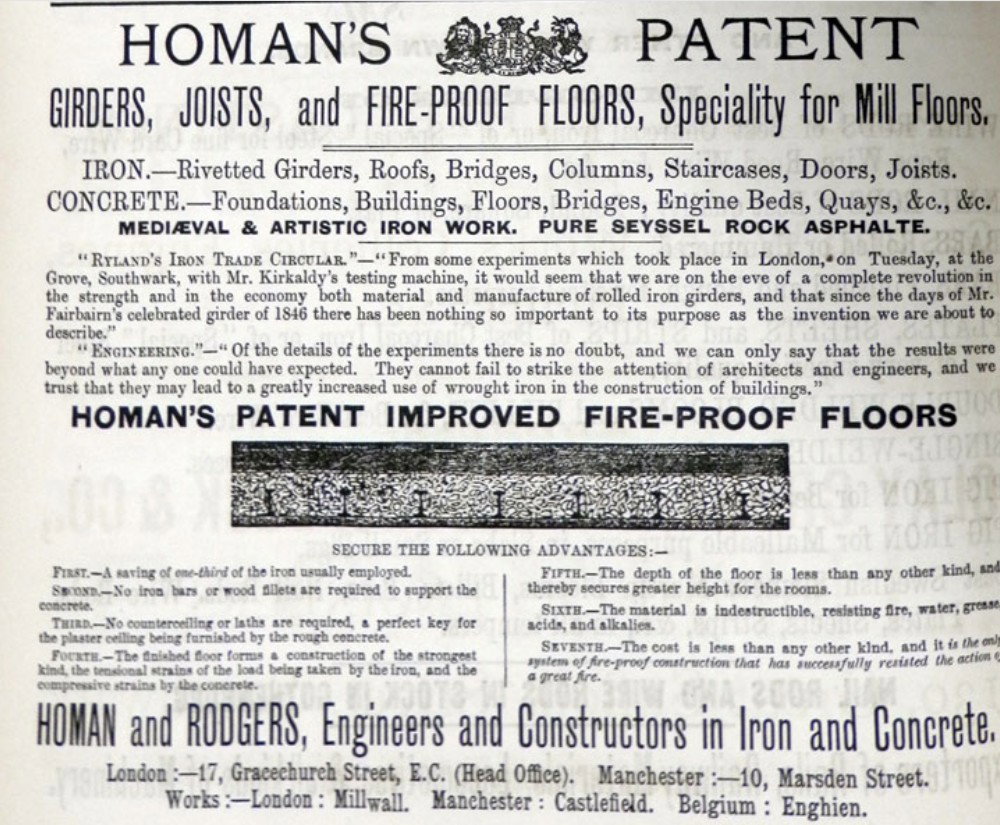
Homan fireproof flooring of the type installed in the Town Hall
The cost of the Clock Tower was defrayed by local ratepayers and landowners and the clock which was donated by the lord Frederick Cavendish Memorial Fund,. Lord Frederick Cavendish, brother of the marquis of Hartington and Lord Edward Cavendish was the newly appointed Chief Secretary for Ireland had been assassinated within hours of arrival in Dublin by members of the Irish National Invincibles in what became known as “the Phoenix Park murders”. The unfortunate Lord Frederick was not the intended target of the attack. The Invincibles had decided to murder Henry Burke, at the time the attack took place he was out walking in Phoenix Park with the newly arrived Lord Frederick. Both men were killed. It took the authorities nine months to track down the assassins. In the end one pf the group Henry Carey turned Queen’s Evidence leading to the conviction and execution of his co-conspirators. Clearly there was now a price on Carey’s head , so the British spirited Carey out of the country and put him on a boat to South Africa. In a twist of fate, he was recognised and murdered by a fellow passenger. Daniel O’Connell who was himself subsequently executed for that murder.. It seems that the fate of their brother might also have changed the political views of the two remain Cavendish brothers. Since the Liberals were supporting Irish Home Rule, the brothers both moved across to the Liberal Unionists. So that is the story behind the Memorial Clock.
“The new Town Hall clock was designed by Lord Grimthorpe, with all the latest improvements. There are three illuminated dials, and the gas is turned up and down automatically by the clock. All the wedges are made of gun metal , with teeth cut from the solid , The escapement is a three legged gravity, one similar to the House of Parliament clock, and the pendulum is a heavy one, with compensation tube for winter and summer.it strikes the hours and half hours upon a bell which bears the following inscription ‘In memoriam Lord Frederick Cavendish, May 6th , 1882’ The whole of the work has been carried out by Messrs John Smith & Sons. Midland Clockworks, Derby[4] "
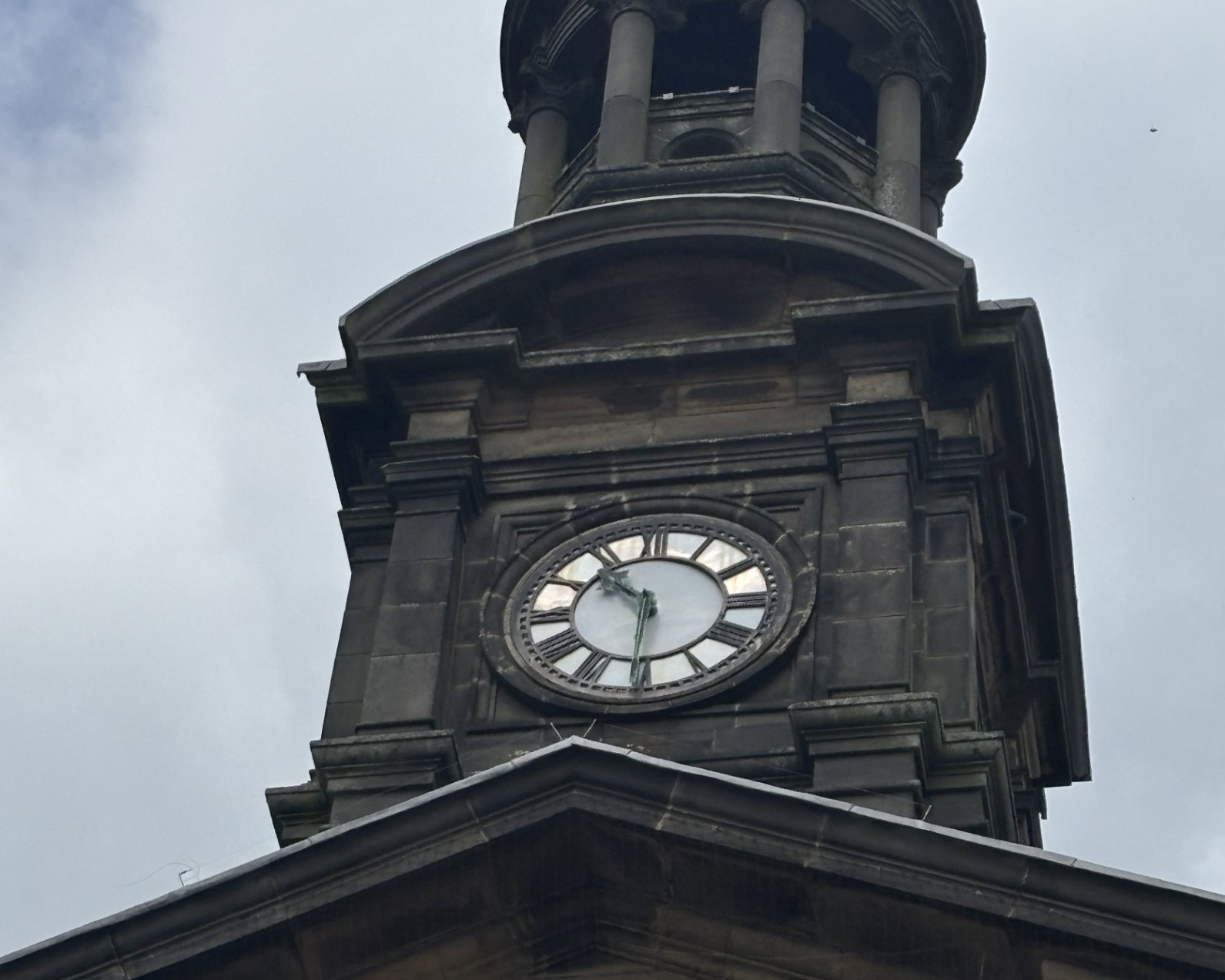
The Town Hall Clock ( not actually working in August 2026) it was designed by eminent horologist, Edward Beckett and built by Messrs John Smith & Sons. Midland Clockworks, Derby
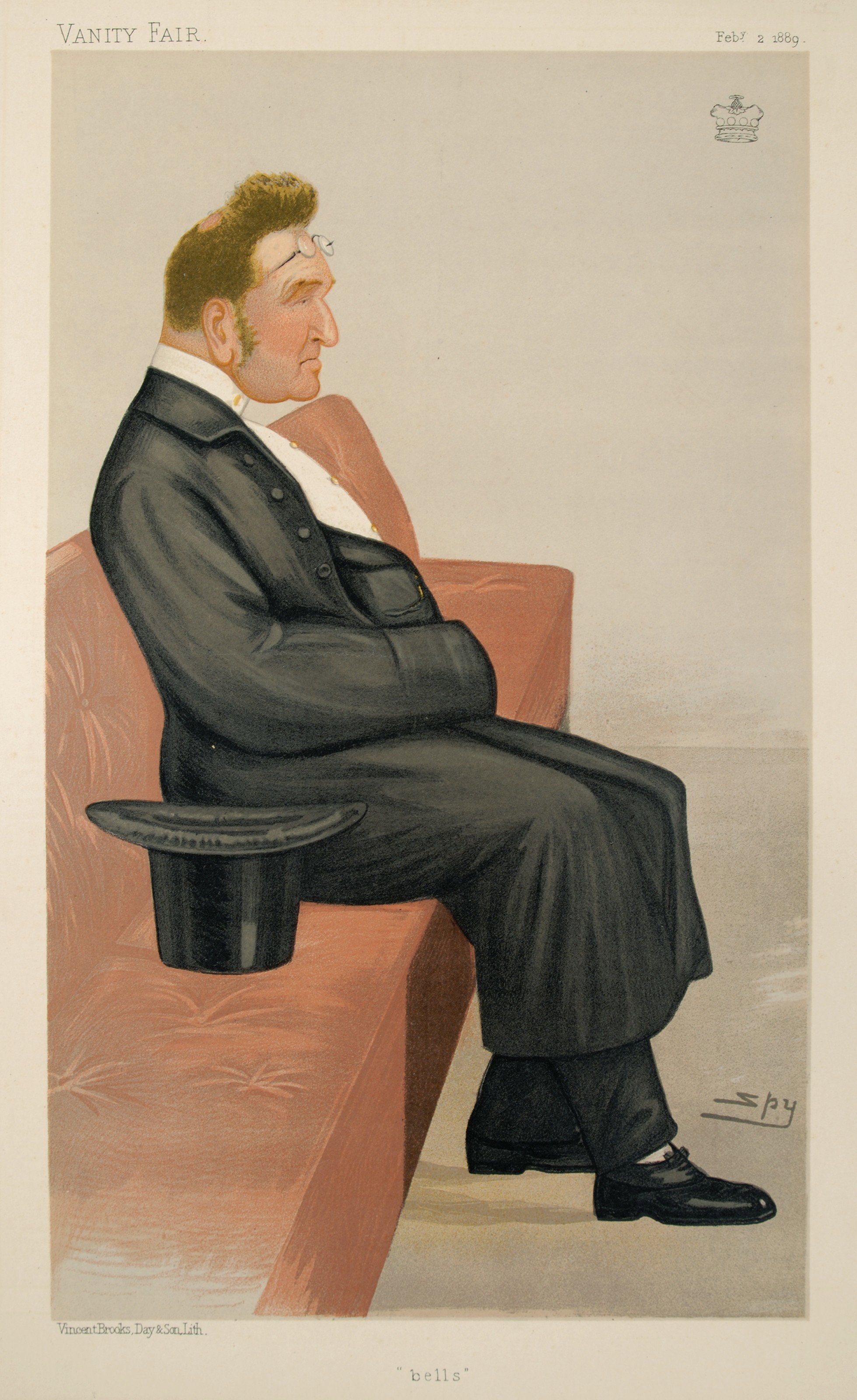
Edward Beckett, clock designer
Edmund Beckett, 1st Baron Grimthorpe, was an English lawyer, mechanician, and noted horologist and architect. Educated at Eton, he went on to read mathematics at Trinity College, Cambridge, where he graduated in the 1838, Beckett began practising law in 1841 at Lincoln's Inn, , retiring in 1881. Apart from being a lawyer, In 1851, he had designed the mechanism for the clock of the Palace of Westminster . He was elected to the the presidency of the British Horological Institute in 1868.
Having been welcomed to the new Town Hall by Edward Milligan, the Marquis of Hartington was handed a gold key by the builder James Salt and taken on a tour of the building. The Marquis was shown a ground floor room, which had been put aside for Masonic Meetings. Apparently only Freemasons were allowed on that particular tour. On the ground floor he was then shown a room which contained a new bust of Lord Frederick Cavendish, this having been donated by Cavaliere Robert Froehlich, the Italian consul in Manchester who was also present for the unveiling. The Marquis was then taken to see the Free Library . Strangely the Library Act did not allow for the cost of purchase of books. In any case, the council had found a £300 surplus, which allowed the purchase of around 2,000 carefully selected books and more would arrive by public donation. The tour was followed by a luncheon for all the attending dignitaries in the Assembly Room of the Town Hall and another round of speeches. The list of attendees included the Cavendish brothers, all the Northern Mayors who had made the trip to Buxton and other local worthies.
Thereafter, the Local Board met fortnightly in the Town Hall in Buxton. Apart from the administration of the town, its activities included the provision of Gas and Electricity. The council had its own sub committees for Gas and Water, Street Committee, Finance Committee and the General Purposes Committee. It may sound strange to the modern reader, but at that time the Local Board and later the Urban District Council and Borough Council were providing the town with not only its library, but also its gas and electric supplies and public health services. Let us remember that at this time, local authorities were much more independent. Finance came from local ratepayers outside the control of Whitehall, and the Local Board had much more autonomy to run their own affairs.
The Town Hall plans did not originally include a museum, however In March of 1895, the Buxton Local Board adopted the 1891 Museums and Gymnasiums act , which allowed for the setting up and funding of local museums by local boards . An amount of £25 was included in the general expenditure estimates cover the cost. Early donations had been made by Felix Joseph, the son of a fine art dealer from Bond Street in London, who had slayed at the Hawthorns in Burlington Road , he donated a small selection of Fine art pottery to the museum. Despite the goods intentions of the Loal board in providing a museum, it was clear that the space provided was not sufficient. A “Visitor “writing to the Buxton Herald in 1899 pointed this out in no uncertain terms.
“ Sir- In view of the impending visit of the Archaeological Association in July next , it may not be amiss to point out the advantage there would be to all parties if the Museum were housed in a more effective manner. The collection is not extensive but the conditions in which it is placed preclude its being enlarged. The nucleus of a good museum is there. One of the items s a collection of celebrated relics from the Caves of Creswell Crags found by Professor Dawkins and the Reverend Mr Mello. It may not be generally known that in one of these caves was a found a bone on which was engraved the head of a horse in a very effective manner by a “ cave- man”. A number oof engravings on antlers, bones & c have been found in France , but this is only specimen I Great Britain, The Caveman belong to the palaeolithic period He was the second of a series of which any remains have been found- The River drift men being the first. How long since that was, it is impossible to say , but Professor Dawkins says he hunted from the Pyrenees to Derbyshire when Britain was joined to the continent. Of course the bone, I alluded, is not at the Buxton Museum , but some of its “Chums” are . I am only trying to show what a capital nucleus, so far as the reputation o he relics are concerned exists. The, there are some fine specimens of a somewhat similar nature, but later period, from the famous Deepdale Cave. Here skull of the Brown Bear ( embedded in stalagmite, indicating its great age ) of the Celtic Ox,, Badger, Fox &c . An antler of an enormous Deer- perhaps an elk- There are “ celts”, axes, hammers, flints of the stone age, A fair selection of fossils and rock specimens of Derbyshire stratifications There are two fine Crown Deby Vass and some old more old porcelains . Some stuffed birds, coins, , carved work &C ;
I submit, respectfully , to you ,sir , that such things deserve a better and bigger abode. A great many of them are unmarked; they are very dusty; and they are jumbled up so that they teach no lesson. A museum is of no use primarily if it does not teach . Everything ought to be an object lesson, so as to convey a lasting impression to the brain, especially of the young . If placed in a series of groups and properly labelled , many quiet profitable hours can spent by a sincere student in consulting such lessons by the way. I do not disguise the fact that Buxton is a health resort and the health of the visitors must be consulted first. Next, come the amusements to ease the distracted mind. Next, come the amusements to ease the distracted mind, But there is a class of people who are best amused and most benefited by educating the mind. That class coming here should be catered for as well as those of more tawdry tastes.“
It is interesting to note how many donations were made to the museum rather than Derbyshire County council, presumably with the intention that they could be seen and studied by local people rather than stored away and hidden from sight due to the lack of suitable accommodation. Certainly at the time the collection was built up, the administration and cataloguing was being paid for by Buxton ratepayers, presumably with that intention in mind Anyway , as well as this local collection off interesting finds and local donations, the Museum was able to display items which had been lent to provincial museum but the museums in London, especially the Victoria and Albert Museum. All in all the Library and Museum were proving a great success, popular with local folk and visitors alike. Possibly too popular in terms of the space allocated.
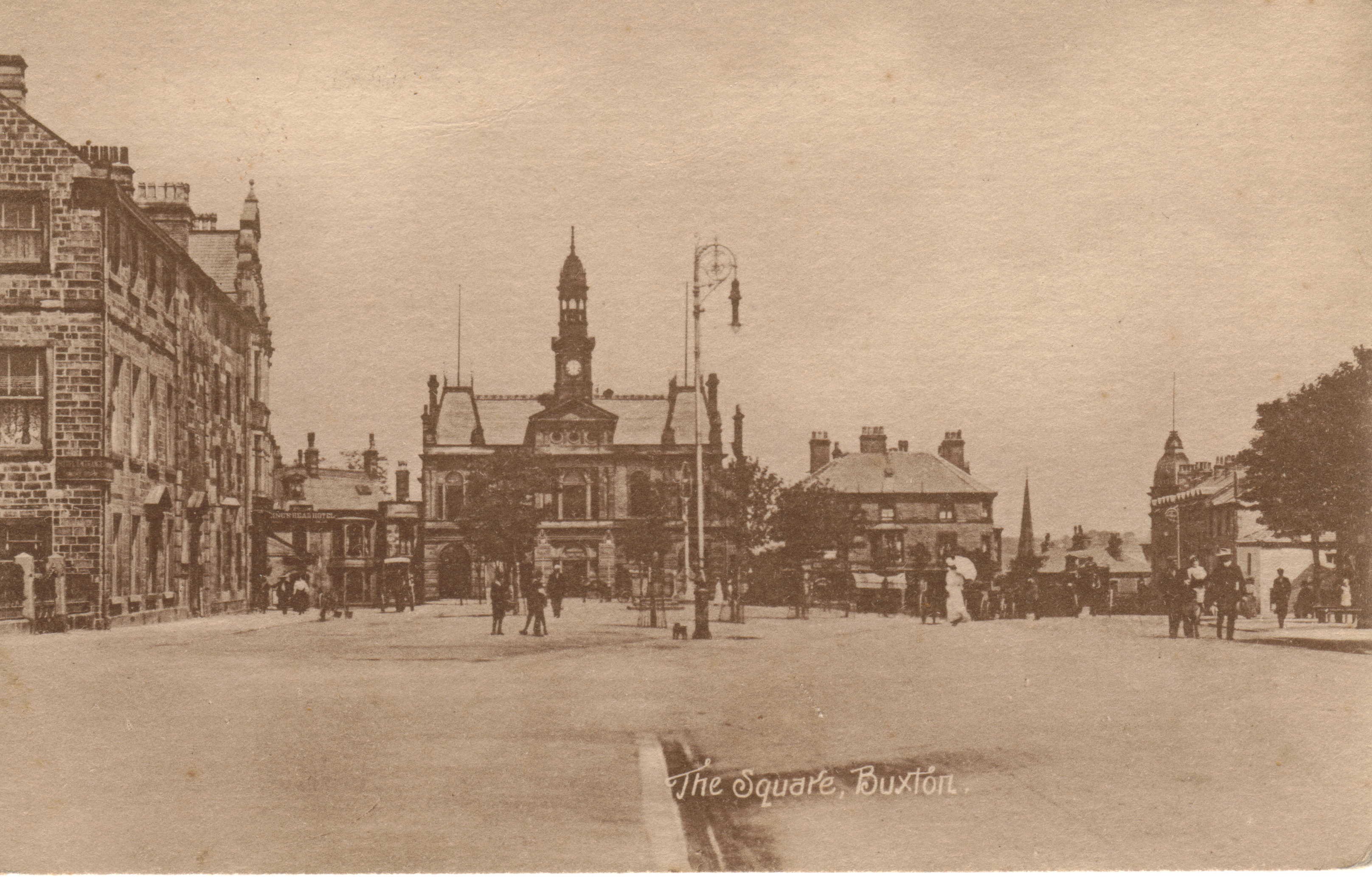
The Town Hall in the early 1900s
In the period prior to the Great War , the Town Hall was also the centre for the administration of justice in the own. Every fortnight on a Saturday, it hosted the Petty Sessions , presided over by the local magistrates. The Petty Sessions was the local Magistrates Court. More serious cases were committed for trial at the Quarter Sessions, or the Assizes ( which under a reorganised Court System would later become the Crown Courts ) . The Petty Session's work dealt with matters such as minor theft and larceny, assault, drunkenness, bastardy examinations, arbitration and deciding whether to refer a case to the quarter sessions.. The quarter sessions generally heard crimes that could not be tried summarily by the justices of the peace without a jury in petty sessions, which were sent up by the process of indictment to be heard in quarter sessions. A lot of the fortnightly work involved licensing applications. Many of the offences tried in the same court seemed to be linked to alcohol, including public drunkenness.
However, some cases were different. In February 1905, the Petty Sessions were forced to deal with a mass outbreak of passive resistance to the 1902 Education Act. This all gets a bit complicated but the act which gave more financial support to Anglican and Catholic schools, severely annoyed Methodists, Baptists and other Nonconformists. Nonconformist opposition was championed by John Clifford, the Baptist pastor of Westbourne Park Church in London Clifford formed the National Passive Resistance Committee, which hoped to convince more Nonconformists to resist the act and stop paying their rates until it was repealed. By 1904 over 37,000 summonses for unpaid school taxes were issued, with thousands having their property seized and 80 protesters going to prison. On Saturday 28th January 1905, Messrs Hubbersty and Lowthian, together with Drs Dickson and Turner sitting in the Buxton Petty Sessions were faced with eighteen prominent and upstanding local citizens being prosecuted for the non-payment of the education rate. As the headline in the Buxton Herald put it ,
”PASSIVE RESISTANCE PROSECUTED. SUFFERERS FOR CONSCIENCE SAKE “.
Given the nature of the case and the prominence of some of the defendants , the Petty sessions was particularly well attended for that meeting, The first five cases were bought by the overseers of Burbage, represented by Mr T Hampson . The defendants included Miss Martha Hobson Morten, a woman of private means residing at 8 Duke street, Burbage, who admitted to owing 1s 4d which she had a conscientious objection to paying and was subject to a distress warrant for the amount. The Reverend A Walliker, a Promotive Methodist Minister of London Road, admitted the partial non-payment of his rates/ he said thev had paid the poor rate , but out odf conscience refused topaty the “Priest rate”. A distress warrant was issued for the outstanding amount. The Overseers of Buxton then pursued the rest of the cases. Mr F.A Holmes of Spring Gardens was summoned for the non-payment of £1 5s 9d. Like the others, Mr Holmes argued that he correctly paid his poor rate, in his case nearly £10, but it was the teaching part that he objected to. He argued that the 1902 Education Act was an illegal act for which the government had no mandate and with which many conservatives disagreed. Despite this the magistrates issued a distress warrant against him . Henry Faulder of Dale Road, who owed 8 shillings tried a different argument, he argued that he was protected by the King’s Coronation Oath, where the monarch had sworn to uphold the Protestant faith , and so he objected to the part of his rate going tot “Romish “ teaching . All the defendants were of good character in the local community,. The Chairman suggested that in future they work towards repealing the Act. Nobody appears to have been gaoled on this occasion, unlike in 1904 when James Gyte a member of the Devonshire Park Wesleyan Chapel was sent to Derby Gaol for continued non-payment.
And here is a cross section of other cases heard in the Petty Sessions in September 1905 and fairly typical of the fortnightly happenings :
F Smallman applied for a vaccination exemption certificate for his child on conscientious grounds.
Peter Bailey of Fairfield was summoned for refusing to leave the Midland Hotel when told to so by the landlord. The case was serious because threats of violence had been involved. Bailey did not appear, nevertheless he was fined 40 shillings or a month in prison if he defaulted.
George Twigg the licensee of the Prince of Wales was summoned for staying open after licensing hours. He pleaded guilty and was fined 1 shilling.
Thomas Millward of Tideswell was charged with stealing a ferret, but the bench weren’t convinced that any crime had taken place and dismissed the charge.
Chas Smith of Hindlow was charged with keeping a dog without a licence. He was found guilty and fined 10 shillings.
A quarryman, Samuel Nadin was charged with keeping 23 lbs of gelignite and 63 detonator caps in an unauthorised place contrary to the Explosives Act. As series of other quarrymen were charged with similar offences. They were all found guilty, but there appears to have been some doubt as to whether Buxton Lime Firms ( who weren’t on trial) wee responsible and the individuals each received a one shilling fine.
Arthur Bainbridge of Lightwood Road was charged with driving his horse and carriage to the danger of passengers , he was fined 20 shillings
And entering the modern age, Henry Dale Nesmyth a chauffeur of Ashby De la Zouch was charged with speeding in the High Street. He was alleged to reached a speed of 18 mph,, but denied ever exceeding 4 or 41/2 mph. He was found guilty and fined £5 and his licence ordered to be endorsed. He was given leave to appeal.
Finally on what must have been a busy and tiring day for the magistrates, Austin Duffy (13) and Percy Biggin (11)) were found guilty of stealing three pigeons and six rabbit. They were sentenced to eight and tree lashes of the birch respectively.
Another interesting case was heard was that of John Turner Walton Newbold in November 1915. A former resident of Buxton and Buxton College pupil, Newbold had studied at Manchester University and became active in the pre/war campaign against the Arms Trade, perhaps unadvisedly he continued his campaign after the war had started. Somewhat naively he wrote to the American socialist newspaper, “The New York Call” asking that the neutral Americans to stop selling arms to Europe. By means of this time, the British were censoring letters addressed to America and a letter addressed to a Socialist –newspaper in -New York was pretty much asking to be steamed open. Newbold was duly arrested under the all -encompassing Defence of the Realm Act (DORA). and charged with sending a letter “likely to interfere with the success of His Majesty’s Forces”. Fortunately, by this time, charges under DORA had moved back into the civil courts. Since he appeared to still be using his parents’ address, he was bought before Buxton Magistrates where he pleaded guilty to the charge and was fined £25. Walton Newbold’s Counsel pointed out that he had also been asking the Americans not to send arms to the Germans as well. The Chairman of the bench implied that Walton Newbold did not realise the seriousness of his actions. Apparently, since writing Communist propaganda was not such a lucrative business, his mother might have paid the fine. Newbold was later to become the country’s first communist MP.
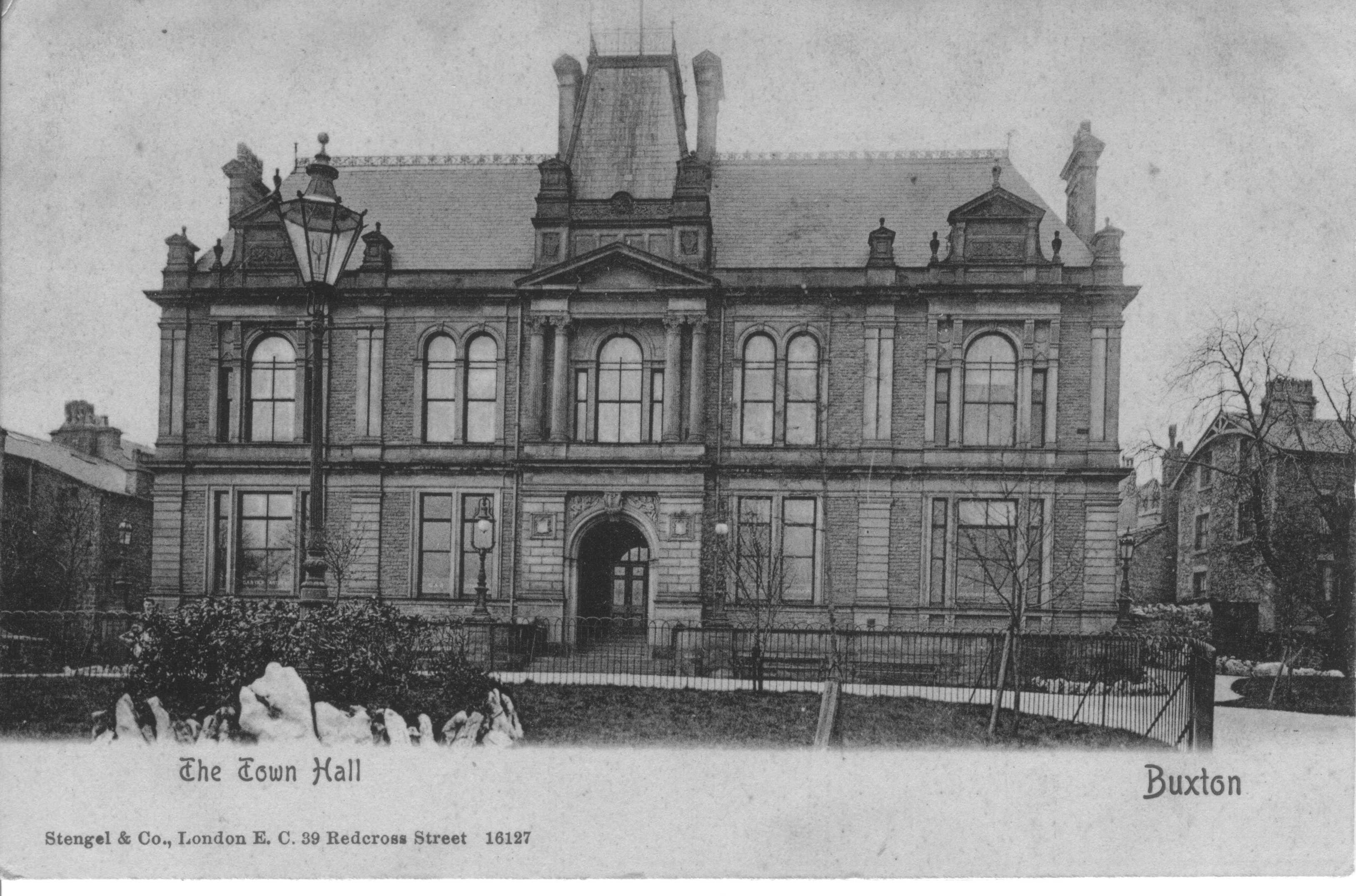
As well as providing a Free Library and Museum, the Town Hall was a centre for local activities. In 1901, the Town Hall was the centre of celebrations for Buxton men returning from the Anglo- Boer War. On 21st June 1901, the Assembly Rooms in the Town Hall were the venue for the welcoming home celebrations for surviving Buxton veterans of the war.
“In the Town hall last night , patriotic felling gave vent once more to a display of enthusiasm at the safe return of our heroes, who were entertained to a dinner which could not possibly have been of a more popular character . The committee who undertook the carrying off the function at the very outset learned that that the work they had taken on was in every sense a labour of love , so ready and general was response made to the appeal for subscriptions . Advantage was taken of the occasion to present each man with what he will throughout his life be proud to look upon as a tangible recognition of the services voluntarily performed and splendidly done, this being a handsome silver commemorative medal . The inscription was as follows; -“Buxton, 21st June ,1901. Presented at a public reception by his Fellow Townsmen to---------, in appreciation of his services to the Empire as a Volunteer in the South African War , 1900-1” On the reverse is the Buxton Crest , with the inscription ; “Buxton quae calidae celeberere nomine nymphae, 1580”
The spacious assembly Hall was beautifully decorated with flags ,, banners etc the Union Jack predominating , whilst over the platform was a splendidly executed festoon of flags and standards , the work being creditably carried out by Messrs Stott and son , of Spring Gardens . A recherché dinner was excellently served by Mrs Shaw of the Railway Hotel,” The menu included Salmon mayonnaise, cold cuts of Beef , Lamb and York Ham , Roast chickens , Veal and Ham pies, new potatoes followed by Nuns and Bakewell Puddings-. While the meal was served Buxton town band played “up to date music”. All followed by a Toast proposed by Captain Abram Brown, then Chairman of the Urban District Council. Medals were handed to Lieutenant Turner DSO, Sergeant Sydney Boughen , Trooper Goerge Bentley, Corporal Perkins , Segreant Turner , Private Norton and Lance-Corporal Blackney. The band struck up and everybody stood up and sang “For they are jolly good fellows”. Unfortunately not present was Sergeant William Henry Perkins who had been killed in the war . A wheeled litter and stretcher was presented to the Buxton St John’s Ambulance Brigade in his memory . Sergeant had been the verger of St James Church for 25 years and had volunteered for the war, and served with the 4th Battalion Sherwood Foresters he had been killed at the action at the Rhenoster Rover in June 1900, aged forty four. Following that engagement, which had been pretty disastrous for the British when around 400 men of the Derbyshire Regiment had been captured by the Boers.
The Assembly Rooms provided ample space which could be hired for public meetings holding up to 1,000 in theory. Perhaps the most noteworthy held there meeting was in July 1916, two weeks after the first offensive on the Somme had commenced, when Buxton Town Hall hosted the annual conference of the Miners Federation of Great. Apparently, Buxton UDC had let the Miner’s Federation, use the Town Hall free of charge , something that the Miners who liked to pay their own way, might not have been overly keen on. Presumably one motivation for the UDC might have been to increase occupancy of hotel rooms in the wartime economy. This was before most of Buxton’s available hotel space was taken over by Canadian Hospitals. It was reported that even the Duke of Devonshire was ready to offer the miners tours of Chatsworth House, which had been closed for public visits for the duration of the war. Unfortunately there are no accounts of whether any miners availed of the offer, or what the men some of whom had gone down the pits at the age of nine, would have thought of the splendour of Chatsworth House. 167 delegates from mining federations around the United Kingdom attended. The delegates included seven Members of Parliament from mining constituencies. The delegates included; William Abraham, MP for Rhondda , a pioneer of trade unionism and the principle of worker representation, who had been president of the South Wales Miners Association . Fred Hall, the MP for Normanton in West Yorkshire, who had started working in mines at the age of nine!. John Hancock, the Labour MP for Mid-Derbyshire, sponsored by the Derbyshire Miners ‘Association and former General Secretary of the Nottinghamshire miners. Barnet Kenyon MP for Chesterfield, who had helped to found the Derbyshire Miners Association , and had been its President from 1898 to 1906. Kenyon had been a moderate voice, during unrest in the Derbyshire Coalfields in 1912, when he had called for industrial action to be directed against the mine owners rather than the public or other industrial sectors.. William Johnson was the liberal MP for Nuneaton backed by the Warwickshire Miners. Samuel Finnry , the MP for Hanley had involved in the North Staffordshire Miners Federation. Also fairly local was John Edward Suttton , MP for Manchester East, a former miner and Manchester City Councillor. Finaly from Scotland, William Adamson , the MP for West Fife and a former General Secretary of the Fife and Kinross Miner’s Association. Delegates were sent to the conference in accordance with the size of their associations , eprsenting well over 600,000 members . Presiding over the conference was the President of the MFGB . Robert Smillie. At the age of fifteen, he had left his native Belfast for Glasgow, to work in the mines of Larkhall; firstly as a hand-pumper at the Summerlee Colliery, which involved working twelve hours a day with no human contact. Smillie worked his way up through the ranks to become the colliery checkweighman President of the Scottish Miners' Federation in 1894. He was a founder member of the Scottish Labour Party in 1888 and of the Independent Labour Party in 1893, and a close associate of Keir Hardie. Smillie's qualities of leadership brought him to the forefront of the miners' struggles, and with the growth of militancy amongst certain sections, opinion changed in his favour. . By 1912, he was elected vice-president of the MFGB and remained in the position until 1921. Most of the Conference was held in open session so the press was able to report freely, and remained broadly supportive of the war . Preceding his opening address, Smillie observed that the meeting was taking place under the shadow of the great tragedy taking place on the continent and that it was difficult to concentrate on their business, important as it was to them. He expressed his hope that long before the next conference peace would be proclaimed and that it would not just be a patched up peace . In his address Smillie said that miners had been doing their best , as far as they possibly could to maintain the liberties which they had won after years of struggle. They had been doing everything in their power to carry out their pledge, that as far as miners were concerned , they would do everything possible to secure the largest possible output of coal for the country, And they could be proud that the rank and file had done everything possible to honour their pledge Then he turned to safety in mines , talks had been progressing with the government to prevent the spread of explosions underground, and government experts had been working hard on this and that he hoped the government would introduce further rules which would make collieries even safer in the future. Smillie then addressed the increases in costs pf living bought on by the war , which had considerably diminished the purchasing power of working people while certain capitalists were profiteering, even while presenting themselves as patriots, he especially called out the shipping industry. Talking of capitalists, Smillie remarked “ Dick Turpin and Tom King were gentlemen in comparison to many of those who have made themselves millionaires during the past two years”. Although he blamed it just as much on the government for letting these things happen in the first place. All in all, the discussions seem to have been moderate and supportive of the war effort . at that stage of the war there was little talk among the miners of international socialism or solidarity with German miners. The main public debate focussed on the nationalisation of the coal mines . It was argued that private ownership of the coal mines was a serious menace to the prosecution of the war. Although prices were fixed for domestic consumption, the prices charged to British Allies were not. Most of France’s coalfields were in the war zone and new ally , Italy had virtually no coal . So the private profits earned by mine owners from export sales were not helping the overall Allied war effort. The view was that private ownership of mines was an inconvenience in peacetime and a national danger in war time. David Gilmour from Hamilton, pointed out that England was the only country in which the owners of the surface of the land were able to claim everything under the land. Even the Germans did not do that.! Robert Brown from Scotland, moved that mines and minerals should be controlled by the state and that if the mines were nationalised at a fair valuation, the cost of purchase could be repaid within five years. It seems to have been a well-reasoned debate focussed on Britain’s war aims, nobody was calling for confiscation or nationalisation without compensation. In closed sessions., the delegates discussed a number of issues important to the mining industry. The question of Workers compensation loomed large. Fred Hall, argued that the Workman-s Compensation Act needed a drastic overhaul. Both in increasing compensation paid for work related accidents benefits paid to dependents and reducing the waiting period for benefits to the furst day after the accident. Furthermore, diseases caused by inhalation of poisonous gases after an explosion should now be eligible for compensation. The conference believed that firemen, examiners and deputies at the private collieries, should be employed by the state as another way to reduce accidents. Away from the immediate concerns of the mining industry, the miners supported an increase in the pension, that education for working class children should not suffer as a result of the war and that soldiers invalided out as a resulting of diseases contracted during the war should be treated equally with soldiers wounded in action. Six months later, in February 1917 the Government finally took over the running of the mines , under the Defence of the Realm Act . A Coal Controller was appointed heading a new department at the Board of Trade. The measure stopped short of nationalisation and amounted to State control over output and distribution. There was a complex financial arrangement to compensate coal mine owners, who were in fact allowed to get all their ancillary activities excluded from government control. The mine owners could live with that sort of state control. While the measures stopped short of full nationalisation, the miners would also benefit ,since coal was now recognised as a national; industry , with national pay bargaining. So while Buxton Town Hall might be seen as having started the road towards the nationalisation of the British Coal Industry, which eventually took place in 1947.
Although funded by a loan, the interest and capital on the loan was repaid by the ratepayers of Buxton. So residents of Buxton had been paying for the Town hall over many ears. In return they got a busy and thriving civic building which served the local community serving the local community with hundreds passing through to use is reading room, the library or browse the museum. Despite the overarching financial power wielded from Whitehall, it was used for the exercise if local democracy where local ratepayers elected a council which raised its own revenue and spent it in line with local priorities. Local folk administered justice to their fellow citizens through the “petty sessions”. They even stored the collected rates in the strong room.Meeting rooms were available for local events, small and large from temperance meetings to celebrating the return of the Anglo Boer War. The place was large and flexible enough to stage National evets such as the miner’s conference. While in the end the building could no longer accommodate all of those functions , especially the Courts, the Library and Museum , it seems a shame and very wasteful that it is lying empty and hopefully there is there prospect that at least some of those functions might be returned to it. That it might be returned as a resource to the people of Buxton, and let’s face it the descendants of many people living in the town paid for it in the first place.
(1) Building News- May 28th, 1886
(2) Glossopdale Chronicle 25th June 1887
(3) Manchester Courier 22 June 1887
(4) The Buxton Advertiser 18 July 1888
(5) The Buxton Herald 3 July 1889